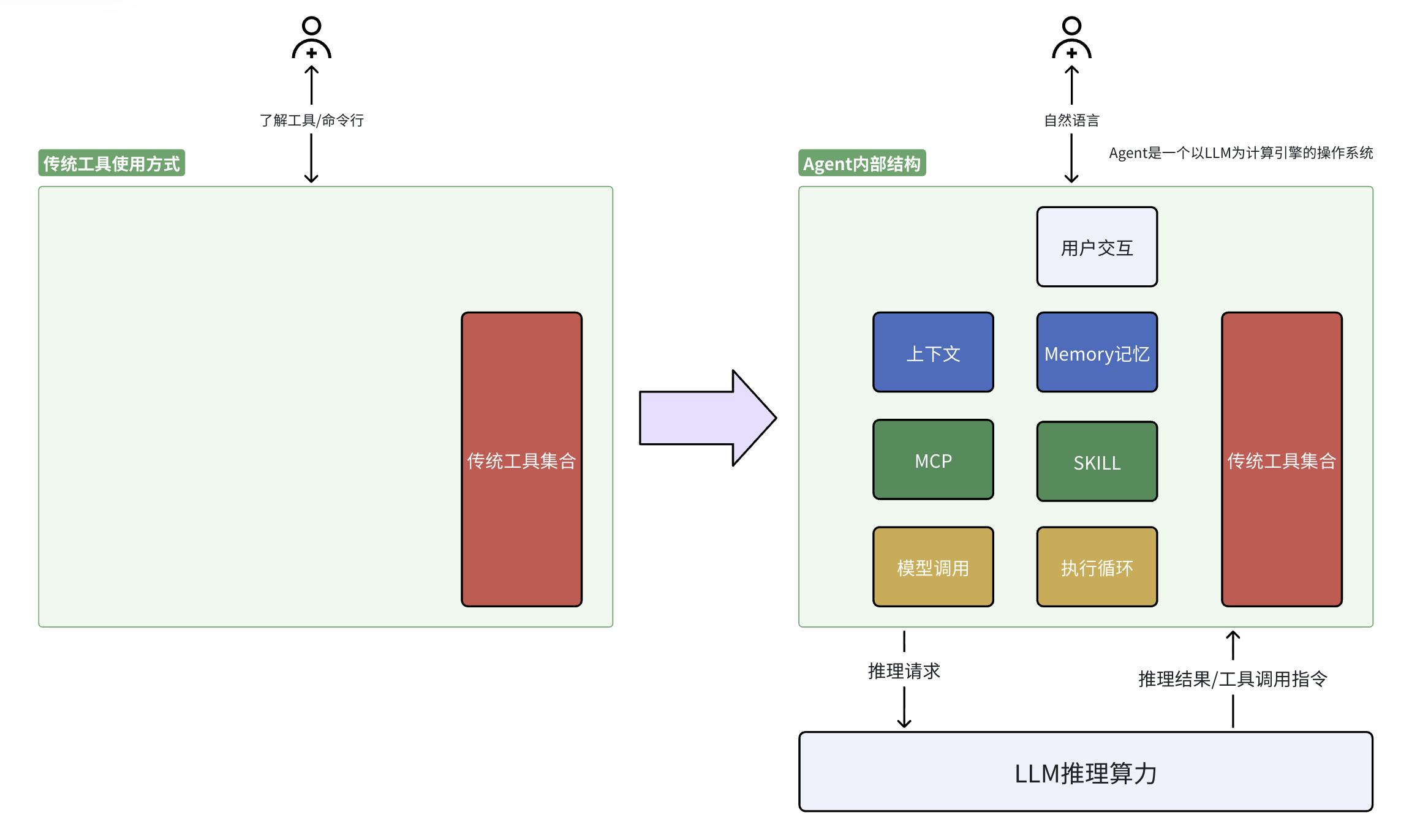
Agents as Universal Interfaces
Prior reading
The article openclaw-system-architecture-overview explains in detail how OpenClaw works. My takeaways:
- LLMs let computers interpret human natural language.
- Agents (OpenClaw, Cursor, Claude Code, and similar) give LLMs a runtime so they can operate the computer (for now, still mostly software on the machine).
- What comes next? Driving peripheral hardware and mechanical systems is only a matter of time.
If we treat software, hardware, and machines as tools, then LLMs plus agents mean people can wield those tools with natural language instead of doing every step by hand. With a “brain,” tools, and instructions in human language—how is that fundamentally different from an individual human?
A small experiment: Agent-Smith
Repository: Agent-Smith: An experiment
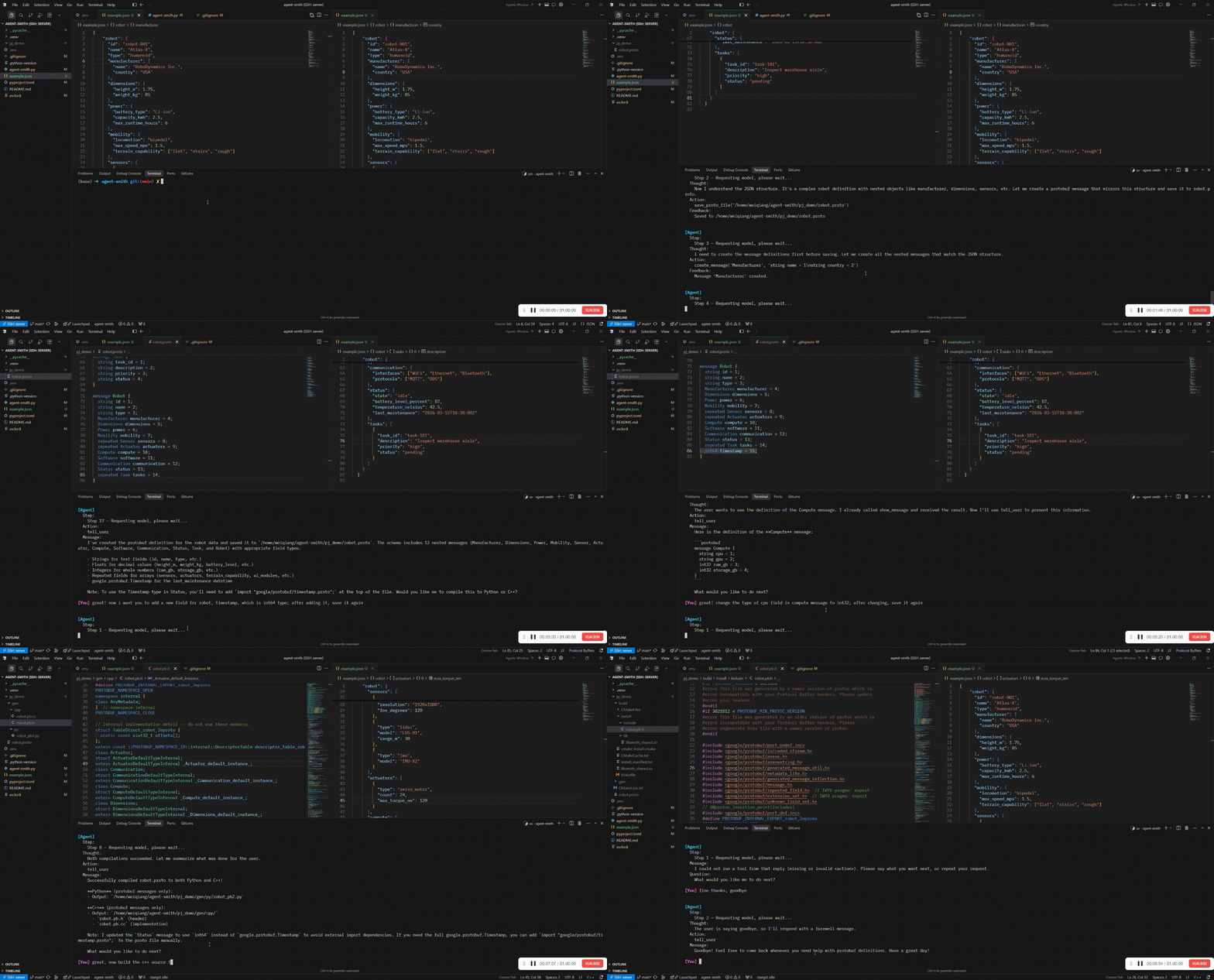
I built a small agent that takes natural-language instructions and can:
- Accept instructions to define, change, or delete Protobuf message types
(instructions can be plain language or existing artifacts such as JSON, C++, or.protofiles.) - Accept instructions to query or search all Protobuf message types
- Accept instructions to compile them into Python or C++ generated code
- Accept instructions to compile C++ sources into a shared library
All of this can be driven from the command line with natural-language interaction:
(Right click to open in a new tab to have better view)
Tools in the form of Agent
Agents let people use tools through natural language. So all tools should be provided in the form of an Agent